

Removals to Italy from the UK – Fully managed door to door
Most people who end up moving to Italy can point to the exact moment it got under their skin. Maybe it was a hill town in Tuscany at golden hour, or a plate of food that somehow tasted better than anything back home. Or maybe it was simply the realisation that life there runs at a pace London, Manchester or Leeds never quite manages. Whatever the spark, it tends to grow into something more serious: a proper plan, a property search, and eventually a date circled on the calendar.
That’s usually when the practical questions start crowding in. What will it actually cost to move your home there? How does customs work now that Britain has left the EU? Which part of the country suits the life you’re picturing, a city flat in Milan or a farmhouse outside Lucca? And how do you find a removals service that won’t vanish the moment something goes wrong?
We’ve put this guide together to answer all of that honestly, drawing on years of experience providing international removals to Italy for British households, and on careful, current research into the rules and costs of a UK to Italy move. When you’re ready to take the next step, our team is ready to help.
What’s drawing Britons to Italy
Britain’s relationship with Italy isn’t new, but it has deepened steadily over the past few years. More than 30,000 British nationals are now officially registered as living there, according to the British Embassy in Rome. That figure doesn’t even include the many more who split their time between the two countries, or who are still working through the paperwork. Lombardy, Lazio and Tuscany alone are home to roughly 46 per cent of them, and Rome holds the largest single concentration of British residents of any Italian city.
It isn’t hard to see why. Living costs in Italy generally run somewhere between a quarter and a third lower than in the UK, and that gap shows up everywhere: in your rent, your weekly shop, your evenings out. For anyone thinking about moving house to Italy on a fixed income or pension, that difference tends to be the number that tips the decision.
A one-bedroom flat that might cost £1,200 to £1,500 a month in a decent UK city could run closer to £550 to £800 in cities like Turin, Bologna or Naples. Head further south or inland, and the figure often drops again. Add genuinely good food, a healthcare system that performs well by European standards, and weather that turns a grey February into something to look forward to, and the appeal stops being abstract fairly quickly.
It also helps that Italy isn’t far away. A flight from a UK airport to Milan takes around two hours; to Rome, closer to two and a half. For anyone who worries that moving abroad means disappearing from family birthdays and weekend visits, Italy keeps that door wide open.
The country itself is also far more varied than most people expect. The mountains and lakes of the north feel like a different world from the rolling hills of Tuscany and Umbria. Those, in turn, bear little resemblance to the sun-baked towns of Puglia or the islands further south. Wherever you’re drawn to, the move itself follows a similar shape, and that’s where we come in.
Interactive cost explorer: select a property size to see estimated UK to Italy removal costs
Tap your property size for an instant cost estimate
1-bedroom flat
£800 – £1,800
Part-load (groupage) available; price depends heavily on the destination region.
How much does it cost to move from the UK to Italy?
Costs for a move to Italy depend on three things: how much you’re taking, which service suits your situation, and how far into the country you’re heading. A move to Turin or Milan in the north covers around 1,300 kilometres from the UK. Head to Rome, Naples or further south, and that figure can stretch past 2,000 kilometres, which naturally affects the price.
The ranges below give you a realistic starting point for a fully managed, door-to-door move.
Our full packing service covers everything: export-grade materials, full handling by our crew, and a complete inventory built as they go.
All prices cover the complete service: collection, packing, transport, customs clearance, and delivery to your Italian address. Northern destinations such as Milan, Turin and Verona generally sit at the lower end of these ranges. Rome, Naples, Sicily and Sardinia tend to sit higher, partly because of the extra distance and, for the islands, the ferry crossing involved. For a figure based on your own inventory and destination, our Move Managers can turn around a quote quickly.
How we move your belongings to Italy
The road from the UK to Italy runs through France and, on most routes, Switzerland. Distances vary hugely depending on where you’re heading: around 1,300 kilometres if you’re bound for Milan or Turin, well over 2,000 kilometres for Rome, Naples or the south. Island destinations such as Sicily and Sardinia involve a ferry crossing too. That adds a little time, but it’s something we plan for as a matter of course on a journey our drivers know well and make regularly.
Part-load (groupage) removals
A part-load service shares your consignment with other households heading the same way. It’s the most cost-effective option for smaller moves, or for anyone with some flexibility on delivery dates. For remover packed loads, our crew packs and loads using export-grade packing materials, with every item individually labelled and inventoried before it leaves the UK. Transit to northern Italy typically takes 10 to 16 days; for Rome and points south, allow closer to 14 to 21 days.
Dedicated removals
A dedicated removals service carries only your belongings and travels straight through to your new address, without stopping at a depot to consolidate loads with other consignments. It’s faster (usually 5 to 9 days, depending on the region) and the natural choice for a full house move, or for anything that needs to land on a fixed date. Because nothing changes vehicles along the way, handling is kept to a minimum.
The process from start to finish
Moving house to Italy follows the same essential process as any home removal – it just adds customs, an international crossing, and a few hundred extra miles.
Your Move Manager looks after everything from the first survey through to delivery. We start with a video survey, which gives us an accurate picture of what you’re moving and lets us build a timeline around your dates. From there, our crew packs and loads using export-grade materials, building a full inventory as they go. That inventory becomes the backbone of your customs paperwork, which we prepare and submit on your behalf. Once your belongings reach Italy, they’re delivered to your new home in Italy, with unpacking and debris removal available if you’d like it.
If there’s a gap between leaving your old home and being ready to receive everything at the new one, we can also arrange access to secure storage facilities at both ends, in the UK and in Italy.
Customs and paperwork: what you need to know
Post-Brexit, moving your belongings from the UK into Italy means going through customs, and Italy’s process is thorough. None of it is complicated once you know what’s needed, and our Move Managers handle the detail directly with our customs partners in Italy, so nothing sits waiting in a warehouse for a missing form.
Transfer of residence: bringing your belongings in without paying duty
If you’re relocating your main home to Italy, you’ll most likely qualify for Trasferimento di residenza, Italy’s transfer of residence relief. It allows you to bring your household possessions into the country without paying import duty or VAT, provided you’ve lived outside the EU for at least 12 months and have owned and used the items for at least six months. The goods need to be for your own continued use rather than for resale, and anything bought specifically for the move, rather than already owned, won’t qualify for the relief.
We prepare a full, itemised inventory in both English and Italian, arrange for it to be translated and notarised through our partners, and apply for the customs authorisation at your point of arrival on your behalf.
Sorting your codice fiscale
One thing that catches people out is the codice fiscale, Italy’s equivalent of a National Insurance number. You’ll need it for almost everything once you arrive, from opening a bank account and signing a tenancy agreement to registering for healthcare or picking up a local SIM card. The simplest route for most people is to apply through the Italian Consulate in London before they go, which means it’s already sorted by the time they land. Your Move Manager can point you towards the right contacts.
Other things to arrange
- Vehicles: The UK and Italy have an agreement on driving licences. In most cases, you can exchange a UK licence for an Italian one without sitting a new test, provided you apply within six years of becoming resident. Importing the car itself involves separate registration with the Italian authorities, and our team can advise on what to expect.
- Pets: Dogs and cats need a microchip, a current rabies vaccination, and an EU-compliant Animal Health Certificate. We work with trusted pet relocation partners who handle this as a matter of routine.
- Valuable or fragile items: Antiques, artwork, pianos and wine collections need specialist packing, and sometimes extra documentation. We build this into the main move rather than treating it as an add-on.
Living in Italy: what to expect when you arrive
Italy rewards people who look beyond the postcards. The country’s regions differ from each other more than most people expect, so “moving to Italy” can mean genuinely different lives depending on where you land. Most people who do their homework end up somewhere that suits them far better than wherever first caught their eye on holiday.
Regions and cities worth knowing
- Tuscany and Umbria: the picture most people carry of Italy before they’ve even visited: rolling hills, vineyards, hill towns like Lucca, Cortona and Orvieto. Tuscany is the better known, and pricier, of the two; Umbria offers much the same scenery and slower pace at a noticeably gentler cost.
- Lombardy and the lakes: Milan is Italy’s business and fashion capital, with a fast pace, a strong job market and excellent transport links. Lake Como and Lake Garda, both close by, suit people who want the lifestyle without quite so much city noise.
- Lazio: home to Rome, where the largest concentration of British residents in the country has settled. A genuinely international capital city, with everything that comes with it, including the property prices.
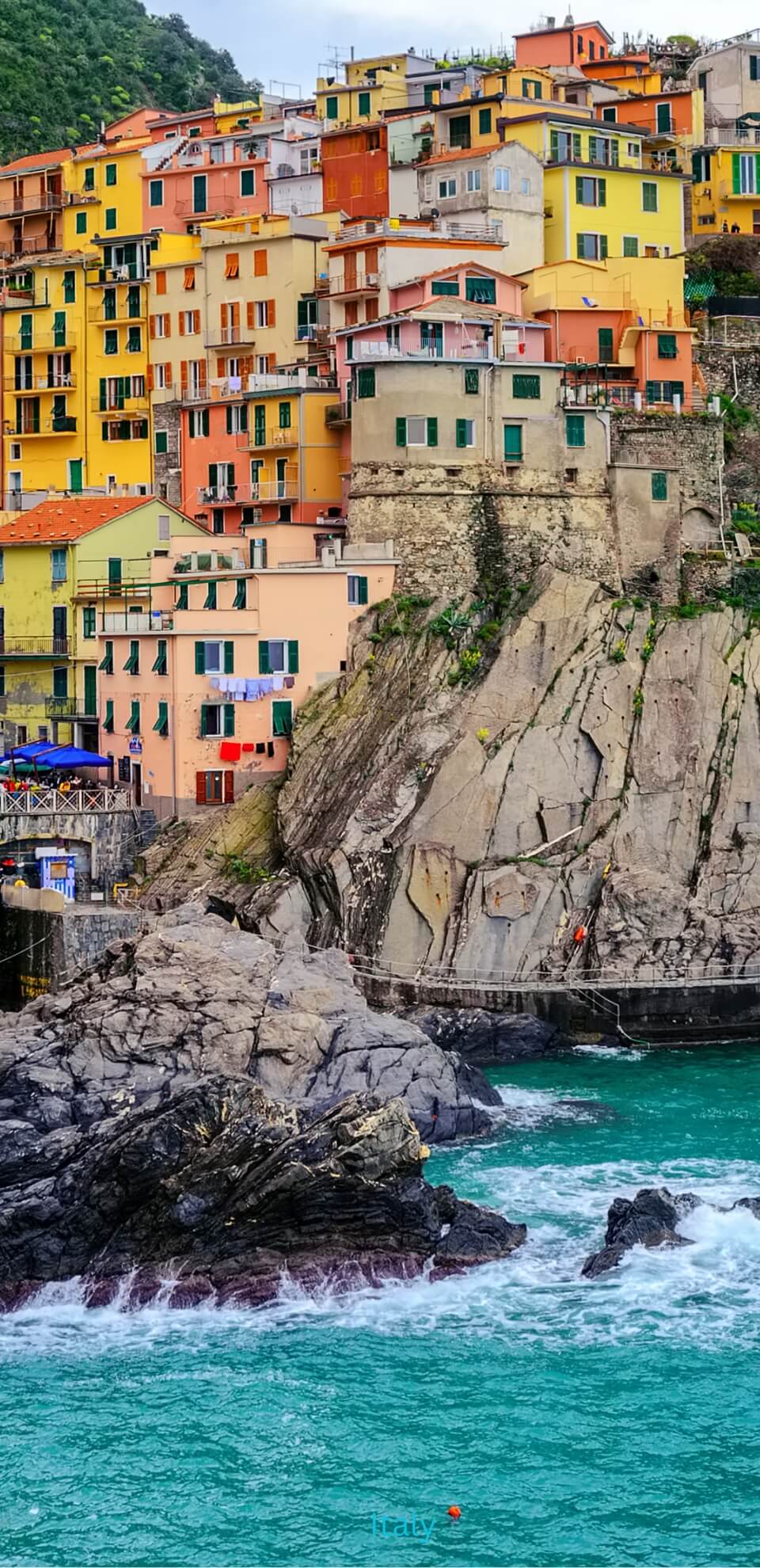
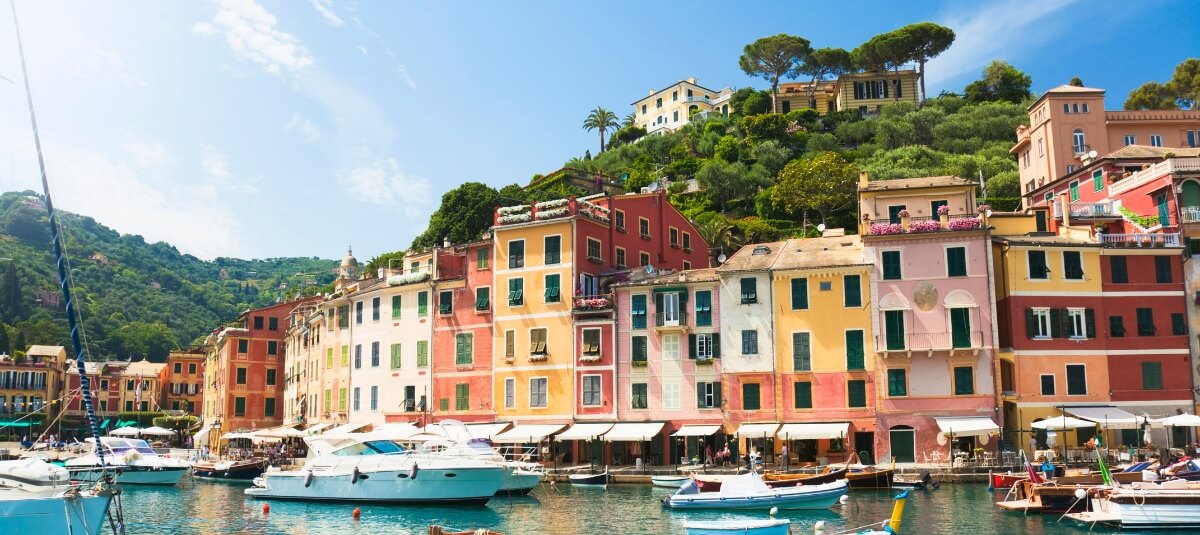
- Liguria: the Italian Riviera, with Genoa as its main city. Dramatic coastline, smaller towns that look like film sets, and a milder climate than much of the north.
- Puglia and the south: the heel of Italy, increasingly popular with people after a slower pace, lower costs and a more traditional way of life. Towns like Ostuni and Lecce have built loyal followings among British buyers.
- Sicily and Sardinia: the islands offer some of the lowest living costs in the country, plus their own distinct food, culture and rhythm. The trade-off is the ferry crossing, which we factor into the move from the start.
We’ve helped people settle into city flats in Rome, Milan and Genoa, hillside houses outside Viterbo and Cortona, and converted properties near Bracciano and Chiavari. Wherever in Italy you’re heading, there’s a good chance we’ve made that exact run before and built up the local knowledge that comes with it.
Cost of living comparison: Italy versus the UK, by everyday expense
Cost of living, side by side
See how far your money really goes in Italy
Pick an everyday expense below and watch the gap appear. These are the costs that quietly shape a month, rent, eating out, getting around, and the weekly shop, set side by side so you can see exactly where the difference lands.
Rent (1-bed city flat)
Healthcare, language and everyday life
Moving to Italy, you’ll have access to the SSN, Italy’s national health service, which has a solid reputation.
As a legal resident, you can register through your local ASL, the regional health authority, once your paperwork (including your codice fiscale and residence permit) is in place. Registration gets you a tessera sanitaria, Italy’s health card, and access to a local doctor.
UK pensioners may also be able to use a form S1 to access healthcare on the same footing as Italian nationals, so it’s worth checking your eligibility before you go.
Italian is the language of daily life almost everywhere outside the most touristy pockets of the big cities, and that’s part of the adjustment for most British arrivals. English is spoken in business and tourism, but learning even conversational Italian opens doors that otherwise stay closed, and most people find the welcome warms considerably once they make the effort.
The weather varies more than people expect from a country its size. The north sees proper winters, with snow on the higher ground and on the plains around Milan and Turin, while the centre and south stay milder and turn properly warm in summer, with temperatures regularly climbing past 30°C between June and September. Whichever region appeals to you, it’s worth experiencing it across all four seasons, if you can, before you commit to a property.
Visa options for UK citizens moving to Italy
Since Brexit, British nationals need a visa to live in Italy for more than 90 days in any 180-day period (the same Schengen rule that limits short stays right across the EU). For anyone planning to settle rather than simply visit, there are two main routes worth knowing about.
The Elective Residency Visa
This is the standard route for people moving on passive income rather than active work in Italy: pensions, rental income, investments and similar. You’ll generally need to show an annual income of around €32,000 for a single applicant (closer to €38,000 for a couple), provide evidence of accommodation in Italy, such as a year-long lease or a property you own, and hold private health insurance.
Working in Italy isn’t permitted on this visa, including remote work for a UK-based employer. Once you arrive, you’ll need to apply for your permesso di soggiorno, your residency permit, within eight working days, and the route can lead to permanent residency after five years.
The Digital Nomad Visa
This one is for remote workers and freelancers whose income comes from clients or employers based outside Italy. You’ll typically need to show an annual income somewhere in the region of €28,000 to €32,000, a relevant qualification or professional background, at least six months of remote working experience, and health insurance that meets the required level of cover. It’s a newer route than the Elective Residency Visa, and the detail can shift, so it’s well worth checking the latest position with the consulate before you commit to it.
Visa requirements change. Verify the latest conditions with the Italian Consulate in London or a licensed immigration adviser before committing to any route.

Why Total Moving Solutions for your move to Italy
We’re Move Assured accredited, one of the removals industry’s most respected trade standards, and removals to Italy is a route we cover regularly, from the cities of the north to the islands in the south.
You’ll be assigned a dedicated Move Manager and removals team from your first enquiry through to delivery at your new address, someone who knows the route, knows the customs requirements, and plans around the things that tend to catch people out.
In practice, that means your paperwork is ready before your belongings reach the border, your collection and delivery dates are agreed and held, and you’re kept in the loop without having to chase anyone for updates. If you need somewhere to keep your things for a while, we can arrange secure storage at both ends. And if you’re moving something that needs particular care, a piano, an antique collection, a classic car, that’s built into our moving services rather than bolted on as an afterthought.
We also offer MoveProtect Enhanced Liability cover for anyone who wants extra protection for their belongings in transit, and our packing teams use export-grade materials as standard, whether you’re shipping a single box or a five-bedroom household.
People who’ve moved with us tend to describe the same moving experience: once the booking was confirmed, they had the peace of mind to stop thinking about the logistics and start looking forward to their new life. That’s exactly how it should feel.




Frequently asked questions
How much does it cost to move from the UK to Italy?
Costs run from around £800 for a smaller part-load move up to £7,000 or more for a large family home, with northern destinations generally costing less than the south or the islands. The main variables are volume, service type, and how far into Italy you’re heading. Get a quote for a figure based on your specific removals to Italy.
How long does a removal to Italy take?
Part-load services typically take 10 to 21 days from collection to delivery, depending on how far south you’re heading. A dedicated vehicle usually runs 5 to 9 days. Your Move Manager will confirm exact timelines once they know your destination.
Do I need to pay import duty on my belongings?
If you’re relocating your main home to Italy, you’ll most likely qualify for Trasferimento di residenza, Italy’s transfer of residence relief, which covers your household possessions without import duty or VAT. You’ll need to have lived outside the EU for at least 12 months and have owned the items for at least six months. TMS prepares and submits the paperwork for you.
Can UK citizens still move to Italy after Brexit?
Yes. British nationals need a visa for stays longer than 90 days. The Elective Residency Visa suits people with passive income such as pensions or investments, while the Digital Nomad Visa suits remote workers and freelancers. Both routes require you to apply for a residency permit on arrival, and both can lead to permanent residency after five years.
What is a codice fiscale, and do I need one?
It’s Italy’s equivalent of a National Insurance number, and you’ll need it for almost everything once you arrive, from opening a bank account to registering for healthcare. You can apply through the Italian Consulate in London before your move, which is the easier route for most people.
What’s the cost of living like in Italy compared to the UK?
Generally lower, often by a quarter to a third depending on where you settle. Rent, eating out, transport and groceries are all typically more affordable, particularly outside Milan and Rome. Most people on a similar income find their money goes noticeably further.
Can I bring my car to Italy?
Yes. You can usually exchange a UK driving licence for an Italian one without sitting a new test, provided you apply within six years of becoming a resident. Importing the car itself involves registering it with the Italian authorities, and we can advise on what that involves as part of your move planning.
Can I bring my pet to Italy?
Yes. Your pet will need a microchip, a current rabies vaccination, and an EU-compliant Animal Health Certificate. We work with approved pet relocation partners and build this into your overall move.
What if I need storage between my UK and Italy properties?
We can arrange secure storage in the UK and in Italy, for short or extended periods. Your Move Manager will factor this into your plan if your dates don’t quite line up.
Is Italy a good place for families?
It can be an excellent one. International schools are established in and around the major cities, particularly Rome and Milan, healthcare is well regarded, and the pace of life in many regions suits families who feel they’re constantly racing the clock back home.
How do I find a home in Italy before I move?
The main property portals are Immobiliare.it, Idealista.it and Casa.it. Listings move quickly in popular areas, so it’s worth starting your search three to four months ahead and being ready to act when something suitable comes up.
Do you cover collections from anywhere in the UK?
Yes. We collect from across the UK, not just London and the South East. Wherever you’re moving from, get in touch and we’ll confirm collection arrangements and timings for your specific move.
Ready to start planning your move to Italy?
Or call our team on 01922 32 40 32 and talk through your move with a Move Manager who knows the UK to Italy route, customs process and delivery timings inside out.