

Moving to Australia from the UK: is it worth it in 2026?
Written by Dan Cozma · Reviewed by James Mallett, Director at Total Moving Solutions · Updated October 2026

Thinking about swapping grey skies for an Australian back garden? You are in good company. Over 1.1 million people born in the UK lived in Australia in June 2024, the country’s largest migrant community, and UK nationals received more than 10,000 permanent visas in 2024-25.
But the sunshine is the easy part. You need a visa, and for most people that means a skilled job, an employer or a partner. Visa charges rose on 1 July 2026 and processing priorities changed in September. A family skilled move often takes a year or more from the first check to the flight out.
The good news is that once you know which visa fits you, the rest is a set of steps you can plan, budget for and tick off. The harder question is whether the move is right for you, and that comes down to your job, your family and how you feel about being a day’s flight from home.
Moving to Australia from the UK: the quick answer
| Question | Short answer |
|---|---|
| Do UK citizens need a visa? | Yes. There is no automatic right to live or work in Australia |
| Main routes for Brits | Employer sponsorship, skilled points-tested visas, partner visas and, for under-36s, the Working Holiday visa |
| Age limit | Under 45 for the main skilled visas. Partner and some employer visas have no general upper limit |
| Visa charges | From A$4,015 (£2,115) for an employer-sponsored 482 to A$6,135 (£3,230) for a skilled 189, main applicant only |
| Planning time | Often 12 months or more for a skilled family move. A Working Holiday visa can take days |
| Shipping time | 6 to 12 weeks by sea, depending on the service and the port |
| Healthcare | Permanent residents join Medicare. Temporary visa holders get limited cover under a UK agreement |
| Where to check the rules | The Australian Department of Home Affairs |
Visa rules change often, so check your own route with Home Affairs, a registered migration agent or an immigration lawyer before you pay for anything. Pounds are converted at £1 to A$1.90.
Can UK citizens move to Australia?
Yes, but you need a visa, as British citizens always have. Brexit changed nothing here, and the main routes are open to Brits on the same terms as everyone else.
In 2024-25, UK nationals received 10,205 permanent visas. Employer sponsorship was the largest route by far.
- Employer sponsored: 4,650 places
- Partner visas: 1,852
- State or territory nominated: 1,602
- Skilled independent: 1,084
- Regional: 521
Another 79,412 Brits got a Working Holiday visa and 11,588 a temporary skilled visa in the same year (Home Affairs UK country profile).
The flow is growing. The Australian Bureau of Statistics counted 40,180 UK-born migrants arriving in 2024-25, up from 31,630 two years earlier, while 14,550 left (ABS overseas migration). That counts people by where they were born, not where they flew from.
One more number matters. Of the 185,000 permanent places for 2026-27, Home Affairs has allocated 129,590 to people who are already living in Australia. Many permanent visas go to people who first came on a temporary visa. A job offer or a working holiday is often the real first step.
Australian visa routes for UK citizens
These are the routes most British movers use. Charges are for the main applicant from 1 July 2026. The last column shows how long Home Affairs took to decide 90% of recent applications, as published on 2 October 2026.
| Visa | Who it suits | Age | Main applicant charge | 90% decided within |
|---|---|---|---|---|
| Skills in Demand (482) | Workers with an Australian employer willing to sponsor them | No general limit | A$4,015 (£2,115) | 9 months (Core Skills) |
| Employer Nomination (186) | Permanent sponsorship by an Australian employer | Usually under 45 | A$6,140 (£3,230) | 25 months (Direct Entry) |
| Skilled Independent (189) | Skilled workers with high points and no sponsor | Under 45 | A$6,135 (£3,230) | 8 months |
| Skilled Nominated (190) | Skilled workers nominated by a state or territory | Under 45 | A$6,140 (£3,230) | 16 months |
| Skilled Work Regional (491) | Skilled workers willing to live and work regionally for 3 years | Under 45 | A$6,140 (£3,230) | 18 months (state nominated) |
| Partner (309/100) | Partners of Australian citizens or permanent residents | No limit | A$11,710 (£6,165) | 32 months |
| Working Holiday (417) | UK passport holders aged 18 to 35 | 18 to 35 | A$840 (£440) | 58 days |
Sources: visa pricing and the visa processing times guide. Partners and children pay extra, and processing times change every month.
Since 19 September 2026, Home Affairs has given priority to applications in construction, healthcare, teaching, agriculture and resources, then to applicants already in Australia. Regional visas no longer get faster processing, so if you work outside those sectors, expect to wait longer than the table suggests.
The points test
The 189, 190 and 491 visas use a points test. You need at least 65 points to be invited, but 65 does not guarantee an invitation: the highest-scoring applicants are invited first, and many occupations need more. Most points come from four things. Age gives up to 30 (at 25 to 32), falling to 15 at 40 to 44. English, skilled work and qualifications give up to 20 each. State nomination adds 5 points for a 190 and 15 for a 491.
You submit an Expression of Interest through SkillSelect and wait. The last skilled independent round, on 4 June 2026, issued 10,000 invitations, and the next was expected by 31 October 2026 (Home Affairs invitation rounds). Your occupation matters as much as your score. Some popular UK jobs, including civil engineer, software engineer and accountant, did not appear in the June results at all. Not everyone who registers is ever invited.
Employer sponsorship and salary thresholds
The Skills in Demand visa (subclass 482) replaced the Temporary Skill Shortage visa on 7 December 2024. Your employer nominates you, and the job must pay at least the market rate. It must also meet the Core Skills Income Threshold: A$79,423 (£41,800) for nominations from 1 July 2026. Highly paid workers can use the Specialist Skills stream, with a threshold of A$146,576 (£77,150) (Home Affairs salary requirements).
A 482 is temporary, for up to four years, but it can lead to permanent residence. After two years of full-time sponsored work in Australia, within the three years before you apply, your employer can nominate you for a permanent 186 visa through the Temporary Residence Transition stream. Work for an earlier sponsor can count, but the employer nominating you must be your latest sponsor, and you normally need to be under 45 when you apply (Home Affairs).
Working Holiday visa
UK passport holders aged 18 to 35 can apply for a Working Holiday visa (subclass 417). It lasts 12 months and you can do any kind of work. Since 1 July 2024, Brits can get a second and third visa without the farm work other nationalities need. You will usually need about A$5,000 (£2,630) in funds. It is a way to try Australia, not a settlement route.
Moving to Australia over 45
The main skilled visas close at 45, but options remain. A 482 has no general upper age limit and partner visas have none. The permanent 186 visa has exemptions for some groups, including high earners whose pay reached the Fair Work high income threshold for two years, university academics, some scientists and doctors working in regional areas. Business and investor visas are not an option: that programme closed to new applicants on 31 July 2024.
Parent visas exist, but the queues are long. Home Affairs estimates 18 years for a new Contributory Parent application and 42 years for the standard Parent visa.
How to move to Australia from the UK: step by step
A skilled move is a project, not a single application. Here is a realistic order of work for a family.
- Check your route. Confirm your occupation is on the right list for your visa, check your age and points, and decide between employer sponsorship and a points-tested visa.
- Get your skills assessed. Most skilled visas need an assessment from the body for your trade or profession. Allow weeks to months; the fees are in the cost table below.
- Take an English test if your route needs one, and book early: the score affects your points. Australia only accepts tests sat at a test centre, not at home.
- Submit your Expression of Interest, or secure a job offer and employer nomination.
- Apply within the deadline once invited. A 491 must be lodged within 60 days of the invitation.
- Complete health checks and police certificates when Home Affairs asks for them. Medicals must be done by an approved panel doctor, and a UK police certificate from ACRO can take up to 30 working days.
- Do not book flights or sign leases until your visa is granted. Home Affairs gives the same advice.
- Book your removal and plan your shipment. Your belongings travel by sea and may arrive after you do.
- Start pet preparations at least seven months ahead. The rabies blood test alone has a 180-day wait.
- Sort your UK affairs: tell HMRC you are leaving, give notice on tenancies and contracts, and redirect post.
- Arrange somewhere to stay for your first weeks while you find a rental.
- Set up in Australia: tax file number, bank account, Medicare, superannuation and an Australian driving licence. Queensland expects permanent residents to switch within three months of living there, and Victoria within six.
Need help with step 8? Our removals to Australia team can plan your shipment around your visa and travel dates.
How much does it cost to move to Australia?

There is no single price, as it depends on your visa, family size, how much you ship and where you land. But you can add up the parts you know.
| Cost | 2026 figure | Notes |
|---|---|---|
| Visa charges, family of four on a 189 | A$12,285 (£6,465) | Two adults and two children under 18 |
| Visa charges, family of four on a 482 | A$10,040 (£5,285) | Employer pays the nomination fee and levy |
| Skills assessment | A$595 to A$1,500 (£315 to £790) for most professions | Nurses A$595 (ANMAC), many professions A$1,146 (VETASSESS), teachers A$1,198, IT A$1,498. Electricians and plumbers up to A$5,320 (£2,800) through TRA |
| English test | £215 to £250 (IELTS) | British Council prices, per person. Test centre only, not at home |
| Police certificates | £70 per adult (ACRO) | Up to 30 working days to arrive |
| Medicals | Clinic prices vary | Approved panel clinics only |
| Removals | Get a quote | Depends on volume and shared or dedicated service |
| Pet quarantine, one cat or dog | A$3,114 (£1,640) for 10 days | Government estimate, excluding UK vet work and flights |
| Rental bond and rent in advance | About A$5,100 (£2,685) | Median Sydney house: 4 weeks' bond plus 2 weeks' rent |
| Emergency fund | Several months of living costs | See the note on benefits below |
Visa charges come from Home Affairs and pet charges from the Department of Agriculture, both from 1 July 2026.
Keep a proper emergency fund. New permanent residents usually wait up to four years for most income-support payments, so there is no safety net if the job search takes longer than planned.
Shipping your belongings from the UK to Australia
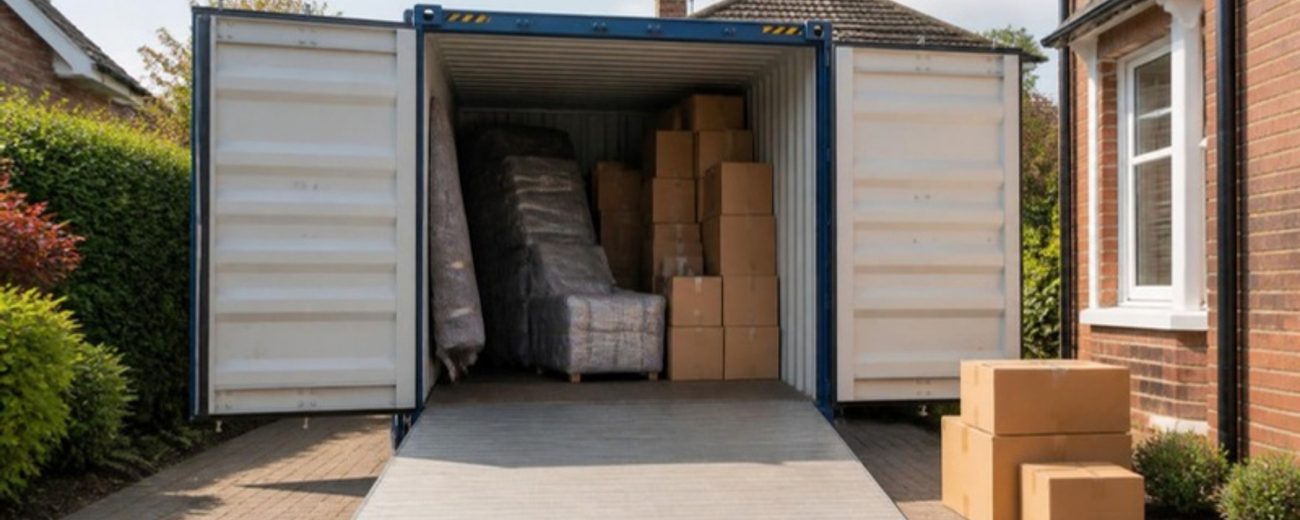
This is the part of the move we know best. Most families ship by sea, and the choice comes down to how much you are taking.
Part load
Your belongings share a container with other customers’ goods. It costs less and suits smaller moves and single items.
Dedicated container
Your household has the container to itself, loaded at your door. It suits full house moves and fragile or valuable items.
Air freight
Much faster and much more expensive. Best for a few urgent boxes that cannot wait for the sea shipment.
Sea freight takes 6 to 12 weeks, depending on the service and the destination port. The price depends on volume, packing, the destination city, access at both ends and any storage. A video survey lets us measure what you are taking without a home visit, and your quote follows from that.
Customs and biosecurity are separate checks. Australian Border Force uses your B534 form to decide whether your goods count as personal effects. Anything you have owned for less than 12 months must be declared and may be taxed. The Department of Agriculture then decides whether to inspect, and it charges A$70 (£37) per 15 minutes for an inspection outside its offices (2026-27 fees). Clean, honest packing keeps that time short.
What you can and cannot take to Australia
Australia’s biosecurity rules are among the strictest in the world. Most household goods are fine, but these need care (Department of Agriculture guidance, June 2026):
| Item | What to do |
|---|---|
| Wooden furniture | Check for insect holes or powder. Suspect items may need treatment |
| Garden tools, pots and outdoor furniture | Remove all soil and plant material and clean every surface |
| Bikes, camping and sports gear | Clean thoroughly, especially anything used on soil or grass |
| Outdoor shoes and boots | Scrub the soles and pack them where they can be inspected |
| Christmas decorations | Remove pine cones, moss, bark and seeds |
| Food | Do not pack fresh food or opened dry food, herbs or spices |
| Plants and seeds | Live plants, bulbs and cuttings cannot be shipped |
| Vacuum cleaners and pet items | Empty, wash and remove all hair and dust |
Moving pets to Australia
UK cats and dogs can go, but plan at least seven months ahead. Your pet needs a microchip, a rabies vaccination and a rabies blood test. Then comes a 180-day wait, an import permit and a stay at the government quarantine station at Mickleham, near Melbourne. The stay is at least 10 days if an authorised UK vet verified your pet’s identity before the blood test, and at least 30 days otherwise (Department of Agriculture).

Shipping a car
You can import a car you have owned and used for at least 12 months before you move. It needs an approval through the government’s ROVER system before it ships. The approval for a car imported as personal effects costs A$57.20 (£30). GST of 10% applies, plus cleaning, port and registration costs (Australian Border Force). On expensive cars, luxury car tax of 33% is charged on the value above A$80,809 (£42,530) in 2026-27, or A$91,661 (£48,240) for fuel-efficient cars (ATO). For most families, selling in the UK and buying in Australia is simpler.
Pros and cons of moving to Australia from the UK

Once you know you can go, the real question is whether you should.
Pros
- Higher wages and a high minimum wage
- More sunshine and an outdoor lifestyle
- Space, beaches and family-friendly suburbs
- Strong healthcare once you are a permanent resident
- English-speaking, with familiar systems
- A large British community, especially in Perth
Cons
- Housing is expensive in the big cities
- It is a long, costly trip home
- Visas are slow, costly and never certain
- The upfront cost of the move is high
- Family and friends are a day’s travel away
- The job market has cooled in 2026
Quality of life and climate
The attraction is partly emotional: a brighter, outdoor life, a safer feeling for families and the hope of swapping drizzle for blue skies. Australia also scores well on paper: it ranked 7th in the UN’s latest Human Development Index, against 13th for the UK.
The weather depends on the city. Perth averages 8.8 hours of sunshine a day and Brisbane 8.2, while Melbourne gets 6.0 and Hobart 5.9 (Bureau of Meteorology). Compare that with about 4.6 hours a day at London Heathrow and 3.7 in Edinburgh (Met Office, 1991 to 2020 averages). Winter falls between June and August, and Christmas on the beach takes some getting used to.
Jobs and salaries
Pay is generally higher. Full-time adults earned an average of A$2,083.70 (£1,095) a week in May 2026, about A$108,350 (£57,000) a year (ABS). The national minimum wage is A$26.44 (£13.90) an hour from 1 July 2026, against £12.71 in the UK. When you compare offers, check whether the salary includes the 12% employer superannuation or is quoted on top of it.
The market is cooler than it was. Unemployment rose to 4.6% in August 2026, and job vacancies were 1.3% lower than a year earlier, with big falls in professional and scientific roles. Healthcare, construction, teaching and the trades remain in demand. Some UK qualifications need local registration before you can work, so check with the professional body for your field early.
Family life and schools
Australian suburbs are built for family life, with parks, beaches and sports clubs that become the centre of the community. Australian 15-year-olds scored above the OECD average in maths, reading and science in PISA 2022, and children usually settle quickly.
Public schools are free for permanent residents, but families on temporary visas can be charged. In New South Wales a temporary resident pays A$6,400 a year (£3,370) per primary pupil in 2026. Independent schools often charge over A$20,000 (£10,500) a year.
Healthcare and Medicare
Permanent residents can enrol in Medicare, Australia’s public health scheme. On a temporary visa, the UK reciprocal health care agreement covers only medically necessary treatment, as a public patient, until your visa expires. It does not cover ambulance transport, dental care, private hospital treatment or a medical flight back to the UK (Victorian Department of Health), so private cover may still be sensible or required by your visa.
Medicare is not the NHS. Most GP visits are free at the point of use: 84.1% were bulk billed in April to June 2026, though only 78.6% for patients aged 16 to 64 (Department of Health). Other GPs charge a gap fee on top of the Medicare rebate. Two rules catch new arrivals out:
Medicare levy surcharge
If you earn over A$105,000 (£55,260) as a single person without private hospital cover, you pay an extra 1% to 1.5% of income.
Lifetime Health Cover loading
If you arrive aged 31 or over, take out private hospital cover within a year of full Medicare registration, or your premiums carry a loading of 2% for every year you are over 30.
Cost of living
Day-to-day life costs more, mainly because of housing. In June 2026 the median rent in Sydney was A$850 (£450) a week for a house and A$780 (£410) for a unit, against A$600 (£315) for either in Melbourne (Domain). Groceries also cost more than in the UK, where supermarket competition keeps prices down.
Buying depends on your visa. From 1 April 2025 to 30 June 2029, most temporary residents are barred from buying established homes, though they can apply to buy a new home. Permanent residents are exempt.
Distance and homesickness
This is the cost no spreadsheet captures. Flying home takes 21 to 23 hours with one stop from Sydney, Melbourne or Brisbane. Sydney is also 9 to 11 hours ahead of the UK, depending on the time of year. Perth has the only non-stop flight, from London in about 17 hours.
Birthdays, weddings and emergencies all mean a long, expensive journey, and homesickness hits most people at some stage.
Culture, work and social life
Culture shock is less about language and more about small expectations. Australians are direct, start early and love their sport. Building close friendships takes effort, and some newcomers find social circles hard to break into at first.
Full-time employees get four weeks’ paid annual leave plus public holidays, so the total is often similar to the UK’s 28 days. Expect one trip home to use most of it.
Money, tax and pensions when you move
The first A$18,200 you earn is tax-free. After that, 2026-27 rates are 15% up to A$45,000, 30% up to A$135,000, 37% up to A$190,000 and 45% above. A 2% Medicare levy is added on top (ATO). Employers pay 12% superannuation on top of your salary.
Before you leave, tell HMRC, either with form P85 or through your Self Assessment return, depending on your situation. Once you are non-resident you generally stop paying UK tax on income from abroad, but UK income, such as rent from a house you let out, can stay taxable in the UK. Under the UK and Australia tax treaty, pensions paid to an Australian resident are generally taxed only in Australia.
- UK State Pension: it can be paid into an Australian account, but it is frozen at the rate you first receive and does not rise each year
- Private pensions: transfers to an Australian scheme are possible, but only to schemes on HMRC’s recognised list, and a 25% overseas transfer charge can apply
Tax and pension rules depend on your circumstances, and mistakes are expensive. Speak to a qualified tax adviser and a regulated financial adviser before you move money or a pension.
Where to live in Australia
Your city shapes your budget as much as your visa does. Perth has the largest British community, Melbourne is now the cheapest of the big five cities to buy in, and Brisbane has the warmest winters of the big cities. Our guide to the best places to live in Australia for British expats compares eight places on prices, rents, pay and climate. Moving with children? See the best places to live in Australia for families.
Still deciding between countries? Read our guides to moving to Canada, moving to the USA, moving to Ireland, moving to the UAE and moving to Norway, or find out why expats are leaving Spain.
Moving to Australia with Total Moving Solutions
Planning a move this far is a big project, but you do not have to manage it alone. Our Move Managers coordinate the whole removal, from packing to delivery in Australia.
- Packing and inventory: we pack and list everything ourselves, which helps keep out items that could cause problems at customs
- Part load or dedicated: a regular part load service for smaller moves and a dedicated service for whole households
- Storage: available in Australia if your new home is not ready
- Cover: MoveProtect, our enhanced liability cover, for your shipment
Tell us your city and what you plan to take, and we will give you a clear quote for the move.

Should you move to Australia?

You should move to Australia if the lifestyle and career upside clearly outweigh the distance, the higher living costs and the visa hurdles for you personally.
Australia typically offers higher salaries, better weather, more space and a very family-friendly, outdoor way of life. But the big cities are more expensive than much of the UK, and you will be a day’s travel from home.
- Is your occupation in demand, and do you have a visa route?
- Can you cover the move and three to six months of living costs?
- Will you cope with family being a day’s travel away?
- Are you happy to spend most of your annual leave on trips home?
- Are you excited about building a new life, not just escaping the UK?
Two things catch people out. An Expression of Interest may never become an invitation, and a temporary visa does not guarantee permanent residence, so have a plan B. Expect the first year to be the hardest; settling in takes time.
More yes than no? You could be ready to start your visa application.
Frequently asked questions

Reviewed by
James Mallett
Director, Total Moving Solutions
I’ve spent around 20 years in the removals industry, helping individuals and families move home and begin new chapters, both across the UK and overseas.
Today, I run Total Moving Solutions, a small, family-run business helping around 80 to 100 customers relocate each month. We arrange UK, European and international removals.
Over the years, I’ve learned that every move is different. Behind every shipment is a person or family with their own plans, priorities and concerns. For me, understanding those needs and offering a personal, supportive service is just as important as the practical arrangements.
I’m proud that Total Moving Solutions is accredited by Move Assured and has received many five-star reviews on Google, Trustpilot and Removal Reviews. That feedback means a great deal to us as a family business, and we work hard to give every customer the care and attention we would want for our own move.